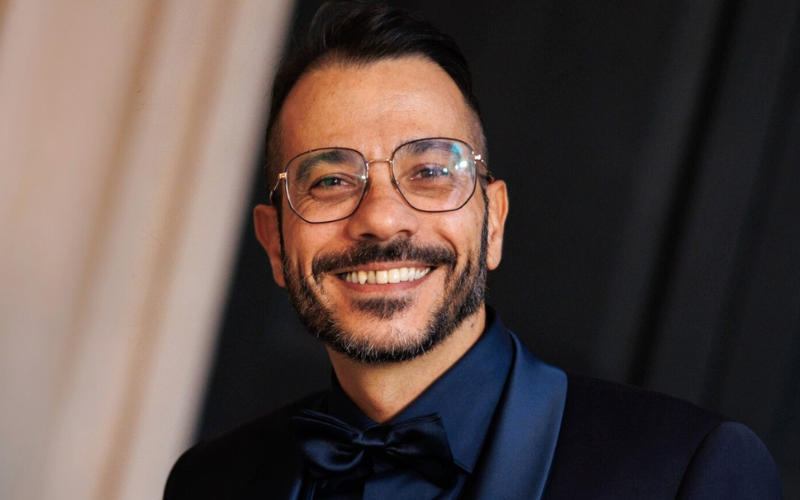
Federmacchine: Gian Paolo Crasta new Secretary General
Federmacchine, the federation of Italian manufacturers of capital goods, has announced the appointment of Gian Paolo Crasta – 46 years old, currently Director General of Acimac and Ucima – as Secretary General, succeeding Alfredo Mariotti after more than thirty years of service to the Italian capital goods system.
“The appointment of Crasta is part of a path of continuity and strengthening of Federmacchine’s action, the federation that represents the entire Italian capital goods sector, a strategic segment for the national industry that generates overall more than €50 billion in annual turnover, with a strong orientation toward foreign markets.
In bidding farewell to Alfredo Mariotti, the federation acknowledges the decisive role he played over more than three decades of activity, during which Mariotti made a significant contribution to the development, growth, and international positioning of the organization and of the entire sector,” Federmacchine explained in its press release.
“At this time, Federmacchine is called upon to carry out, with particular attention and determination, its role as representative of the interests of the capital goods sector at national and European Union tables,” stated the President of Federmacchine, Bruno Bettelli. “Our thanks go to Alfredo Mariotti for the work carried out over more than thirty years of activity. Under his leadership, Federmacchine has gained authority in Italy and abroad, to the benefit of all the companies belonging to the capital goods sector. The appointment of Gian Paolo Crasta responds to the need to continue strengthening with determination the capacity of our system to represent itself vis-à-vis institutions, supporting companies in the challenges of technological transition, international competitiveness, and the defense of manufacturing as a strategic national asset. With the appointment of the new Secretary General, Federmacchine confirms its commitment to supporting capital goods companies, promoting innovation, competitiveness, and dialogue with national and European institutions.”
Read also...
Wood drying: technology, energy and skills at the centre of the debate
Altendorf concentrates production in Minden
Dürr, new metering pump for industrial coating applications
Energy renovation: a challenge involving the wood industry as well
Raute, EUR 31 million order to expand plywood production in Estonia