Logistica e automazione: ecco la sfida di Formetal
Around forty employees, a turnover of approximately eight million euros, the Italian market absorbing almost all production, and an absolute vocation for “tailor-made” solutions: this, in a nutshell, is the identity card of Formetal from Pesaro.
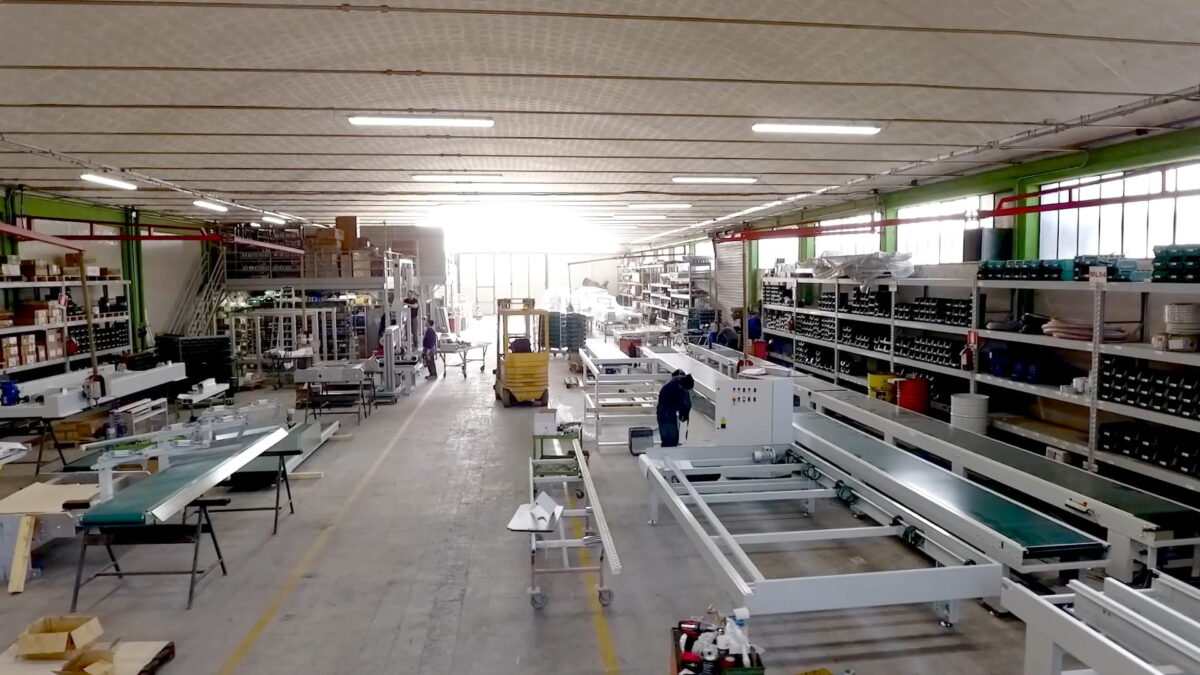
Formetal boasts an expertise that has been increasingly in demand and widespread over the past few years: making the production of furniture and furnishings as high-performing as possible. They do not build machines: for several decades now they have been taking care of everything else, dealing with logistics, handling and automation. Everything that does not directly intervene on the workpiece, but concerns the “transition” from one phase to another, is their responsibility.
A task that is highly appreciated in more mature markets, where labor is increasingly difficult to find and represents a “demanding” cost item in defining the final price: whether it is overturners, shuttles, line handling or automated warehouses, rest assured that at Formetal they know very well what it is all about and how to solve any situation.
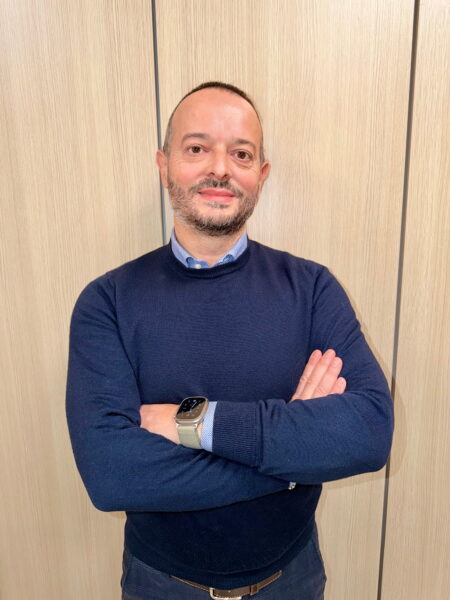
So here we are in Montelabbate, a handful of kilometers from Pesaro, to have a chat with Federico Galli, Formetal’s sales manager.
“We are a small company that has developed great experience in the world of automation”, he tells us. “We operate in a niche market in which we propose highly customized projects. Everything we do is tailor-made, aimed at solving a problem in a specific way, connecting flows, optimizing phases and paths so that machines can express their full potential: it is up to us to ensure that there is always a piece ready to enter the machine and that the already processed one is sent to the next phase as quickly as possible. A company that has grown and now offers additional services to its customers, from assembly lines to automated warehouses, as well as packaging solutions.
Our sector has undoubtedly made many steps forward and Formetal has certainly been a protagonist of these changes: we were among the first, for example, to implement automated guided vehicles in our solutions for the furniture industry, the famous “AMRs” (Autonomous Mobile Robots, ed.), a solution that – we are certain – will be increasingly appreciated.
In our daily challenge with concepts such as “batch size one”, productivity, advanced automation, customization, variability in terms of dimensions and functions, it is essential to keep an eye on everything new that appears on the technology stage, firmly convinced that innovations must be understood and experienced. Take the example of “AMRs”: they seemed destined to be little more than a curiosity, and instead today they are able to transport up to three tons of material and have batteries that guarantee coverage of an entire work shift without problems, vehicles that recharge themselves or autonomously replace batteries. Always with maximum flexibility and in absolute coordination with the rhythms and cycles of the entire production line”.
You are undoubtedly among the protagonists of the evolution that has taken us from the traditional furniture factory to fully integrated production systems, now common in other sectors as well…
“We have done and continue to do our part: as I mentioned, one of our priorities is to follow and analyze every new technology in order to evaluate its applicability in the sectors in which we are involved. Furniture production too is dealing with new ways of manufacturing: think about how a panel is processed today or about packaging, which is increasingly moving away from plastics and shrink-wraps and increasingly attracted to cardboard which, in addition to being recyclable, allows strong customization of the product container, with a significant contribution also in marketing terms.
Experiences that, little by little, we have also been called upon to bring outside the world of wood, starting to work in other sectors in which our expertise is highly appreciated”.
Has “batch size one” production meant a lot for you?
“Automation takes on a different meaning, if you will deeper and more challenging, when it comes to managing dozens, hundreds or thousands of pieces, each different from the other. It is in this context that you need to know how to apply what you know and what you are able to do. Large batches practically no longer exist and we are all looking for personalization, for what best tells our story. At the same time, what is demanded of a piece of furniture has changed: a kitchen or a wardrobe used to be a box with a door in front; today there are lights, mechanisms, transformers, different materials coexisting… desires that entail a decidedly more complex production logic, I would even say unmanageable if adequate equipment is not adopted, both from a mechanical and IT and system perspective. Every single part of a piece of furniture, even the smallest, now has a name and a surname that allows not only trouble-free assembly, but also the tracking of everything, every step. Information that forms the basis of modern business management”.
So the real automated factory awaits us. Will there no longer be room for manual skills, for the “artisan” of the past?
“We are talking about two different worlds: large companies, international groups and even what I would call “industrial artisans” face needs that are different from those of the traditional company. Numbers make the difference: as long as it is a matter of processing a few dozen pieces a day, certain solutions are pure science fiction, yet even the smallest artisan today uses machines that in the past he would not even have considered, continuing to produce “beautiful things” with new tools. I believe that even some logistics and handling solutions that today seem destined only for “large batch size one volumes” could in the future be very interesting for them as well…
Everything indicates that in the next five or ten years things will be very different: it is no coincidence that legislators have decided to introduce instruments such as “Industry 4.0” or “5.0”, because among the furniture makers of tomorrow – to remain in the world closest to us – there will be fewer and fewer carpenters and more engineers!”.
Is there a “change of scenario” that you see approaching?
“I believe we will have to deal with the potential of artificial intelligence. It is not a change that will happen tomorrow or the day after, but as soon as we understand what we could ask for and what answers we will receive, there will really be a lot to imagine and to transform even in our everyday work”.
Satisfy our curiosity: who turns to you? Who is your customer? The machine builder or the one who uses the machines?
“The two approaches coexist: on the one hand we have important collaborations with all the main technology manufacturers, with whom we have an indispensable relationship in order to define complex solutions without any limits in terms of effectiveness and efficiency. From a numerical point of view, however, the relationship with the end user is undoubtedly more significant, because it is the fundamental step to understand what the real needs are and what we can do for them. We return to the theme of “everything we do is tailor-made” that we mentioned at the beginning of our conversation”.
In fairly recent times, quite a few manufacturers have also chosen to deal with logistics and handling: is that a problem?
“No. It does not seem to us to have had such an impact as to generate new situations: relationships of collaboration and sharing continue to exist, especially in more complex situations, where our flexibility allows us to be valuable suppliers and partners.
I would add that there is an important part of our work, I would say 50 percent, that comes from adaptations, upgrades and replacements of existing systems, and in this case the relationship with the end user is direct: there is and there will always be room for everyone, we are convinced”.
Let’s talk about territory, about ties with this authentic furniture district in which you were born and operate…
“The evolution of Formetal has inevitably been closely linked to the affirmation of furniture “made in Pesaro” and everything that revolves around it between Emilia Romagna and Marche. We are an example of that deep integration between mechanical industry and the furniture world that has allowed this district to become a protagonist. We have grown side by side, shoulder to shoulder: it is obviously no coincidence that in this area there are kitchen and furniture manufacturers and suppliers of technologies and systems known all over the world. Not to mention a very dense network of subcontractors, suppliers, specialists, small and medium-sized enterprises that have truly made all this possible: we ourselves rely on a network of excellent companies that work for us producing parts and components, allowing us to focus on the specificities of our work”.
And competition?
“Logistics and automation have experienced a very strong acceleration and it is inevitable that this means having to deal with others. This does not frighten us, on the contrary: it stimulates us to always be one step ahead. Also in this case I would like to say that there is room for everyone who works well and seriously. The problem is not what we can define as “internal competition”, a context in which we share a vision of quality and rules, but rather the comparison with distant countries that have become very close: for the moment they are competing with machines and technologies, probably easier to replicate than a job – ours – that requires adapting every intervention to the specific needs of the customer, to the spaces available, practically inventing a different answer every day. These are not ideal conditions for those who prefer to reason in terms of large numbers and standardized solutions, but this does not mean that it will not be a field in which we too will have our game to play.
The word “service” for us sums up very different aspects, all extremely important and engaging: expertise, experience, design, effectiveness of the solution, reliability, continuity. We are talking about fundamental qualities which, combined with the advantage of being able to interact in a simpler and more direct way, make and will continue to make the difference, in my opinion. Without ever getting tired of looking out of the window, avoiding by all means retreating into our comfort zone, because then yes, we would have reason to fear having to compete”.
Edited by Luca Rossetti
formetalsrl.it
Read also...
Paoletti Engineering for Wood Box: sustainable choices
Hymmen at Tech-Together 2026: surfaces, digital printing and data in focus
Italy-Austria, the timber sector looks to a shared roadmap
Homag Treff 2026: technologies, automation and digitalisation in the spotlight
European sawmills: fragile recovery as weak construction and raw material shortages weigh on a strategic sector