Italian manufacturing: nearly 7 out of 10 companies are in line with their targets
In Italy, with over 486,000 active companies at the end of 2025, the manufacturing industry confirms itself as one of the pillars of the national economy and approaches 2026 with an overall stable outlook, despite a context marked by new competitive pressures. In this scenario, the manufacturing sector continues to show resilience thanks to entrepreneurship capable of adapting and staying the course. Nearly seven out of 10 companies report that their business performance is consistent with the goals set for the year, while the overall level of satisfaction remains good, with about 30 percent expressing high or very high satisfaction, demonstrating the resilience and ability of companies to maintain results in line with expectations over time. Despite uncertainties related to the impact of tariffs, which concern about half of companies, and the evaluation of the new measures introduced by the 2026 Budget Law, considered insufficient by 55 percent, companies still place central importance on their ability to guide industrial decisions based on market priorities and translate expertise and technological innovation into competitiveness. In this framework, incentives represent possible support, but not the only lever to sustain growth.
This is what emerges from the Mecspe Observatory carried out by Nomisma relating to the third four-month period of 2025 and presented during the opening event of the 24th edition of Mecspe, the trade fair dedicated to the manufacturing world and industrial innovation, organized by Senaf at BolognaFiere. Looking at the two-year period 2026–2027, 56 percent of entrepreneurs indicate moderate confidence in the evolution of the market in their sector, while 26 percent express high or very high confidence, confirming the solidity of companies and their ability to continue building their growth path even in an evolving scenario. This orientation is also reflected in operational assessments: 35 percent of companies consider their order book adequate or above their productive capacity and business targets, while 30 percent consider it stable. The sector continues to focus on competitiveness and resilience by investing in efficiency, automation and digitalization, and by relying on entrepreneurial capacity to translate these choices into a concrete advantage, followed by structural transformations such as customization, the energy transition and environmental sustainability.
Alongside these elements, in the third four-month period of 2025 companies reported several critical issues that had the greatest impact on their activities: uncertainty related to the international context, fluctuations in raw material prices and difficulties in finding human resources, an issue that draws attention to the skills needed to sustain growth paths.
Added to this scenario is the issue of measures supporting investment introduced with the 2026 Budget Law, which come after the conclusion of the Transition 5.0 Plan, already subject to not entirely positive evaluations by entrepreneurs. According to the Observatory’s previous survey, nearly half believed that incentives were insufficient, while still recognizing their importance for innovation, or judged them completely inadequate to support the sector.
The new measures for 2026, such as hyper-depreciation and the refinancing of incentives for Industry 4.0, are also receiving a cautious assessment: more than half of companies consider them little or not at all sufficient to support their growth strategy. Consistent with this scenario, more than half of entrepreneurs have not yet decided whether to make use of the available instruments and only 1 in 5 plans to apply. Among the main obstacles are failure to meet the required criteria and the complexity of procedures, followed by the perception that the measures are only partially suited to companies’ needs. In some cases, companies also choose to invest without resorting to public instruments, confirming an entrepreneurial approach that places investment at the center when necessary, even in the absence of extraordinary measures.
On the international front, the issue of tariffs continues to have a concrete impact on business activities: more than half report that they have already experienced or are experiencing effects, with 2 out of 10 entrepreneurs indicating significant negative impacts and 3 out of 10 reporting more limited effects. Not surprisingly, about half of the sample says it is very or fairly concerned about the evolution of the trade framework. This is in line with the recent analysis by the Confindustria Research Center, which recorded a decline in Italian exports in the fourth quarter of 2025 (down 1.9 percent). However, the Mecspe Observatory highlights prospects of stability for exports in the 2026–2027 period: more than half of companies expect a stable trend, while about 28 percent anticipate growth.
Read also...
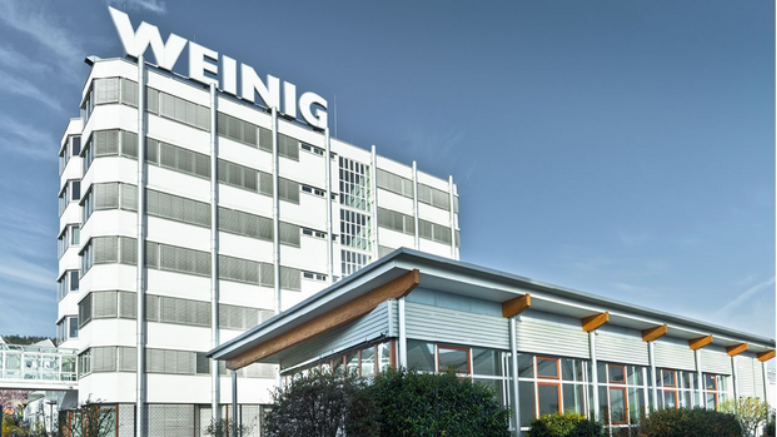
Weinig reorganizes production in Germany: launch of the “Transformation 2027” plan

Fertilizers, Assopannelli: welcome the suspension of duties, but CBAM on urea must also be halted

TWT has announced the acquisition of Omas
SCM, a new vision in “Batch One” edgebanding
Global Export 2024/2025: first-half data