Energy renovation: a challenge involving the wood industry as well
In 2025, 46 per cent of the EPCs issued in Italy fell into energy classes F and G. A figure that confirms the importance of renovating the existing building stock and creates opportunities for windows and doors, building envelopes, components and timber construction systems.
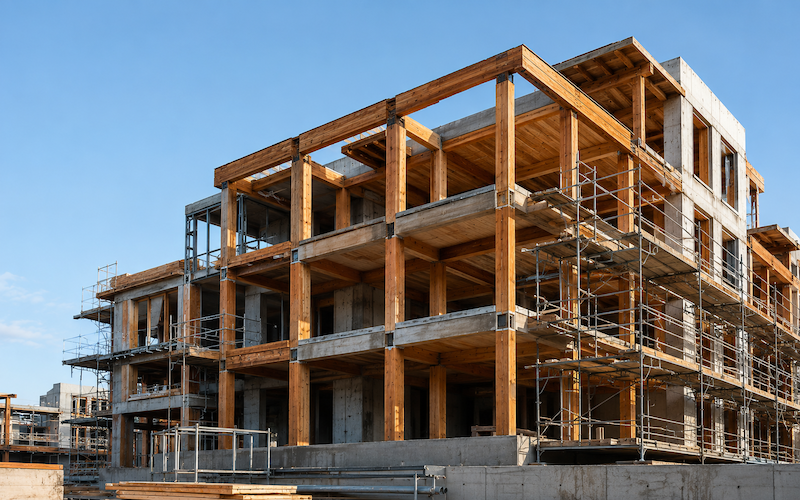
Improving the energy performance of Italy’s building stock remains one of the main challenges for the construction sector and, consequently, for many of the industrial supply chains connected to it. These include the wood industry, involved through windows and doors, components, building envelope systems and construction solutions for the building sector.
The scale of the issue is highlighted by data processed by Saie – La Fiera delle Costruzioni, based on Enea’s SIAPE information system. In 2025, around 1.3 million Energy Performance Certificates were registered, 6.4 per cent more than in the previous year. Of these, 46 per cent fell into classes F and G, accounting respectively for 22 and 24 per cent of the total, an overall increase of two percentage points compared with 2024.
At the other end of the scale, EPCs relating to classes A1 to A4 represented 11 per cent of the total, compared with 14 per cent in 2024. These figures do not describe Italy’s entire building stock, but they nevertheless provide a significant snapshot of the buildings that underwent energy certification during the year.
The issue will be at the centre of the 60th edition of Saie, scheduled to take place at BolognaFiere from 7 to 10 October 2026, where renovation, sustainability, indoor comfort and energy efficiency will be among the main topics on the programme.
This is an area that also directly concerns the wood industry. Among the initiatives scheduled are the Laboratorio Serramento e Posa in Opera, organised by Consorzio LegnoLegno, as well as a number of sessions dedicated to material innovation, building envelopes and solutions for more efficient and sustainable buildings.
For the woodworking industry, the construction sector therefore continues to represent an important market, not only in the field of structural timber construction, but also for technologies and processing solutions intended for windows and doors, components and integrated building systems.
Read also...
Altendorf concentrates production in Minden
Dürr, new metering pump for industrial coating applications
Raute, EUR 31 million order to expand plywood production in Estonia

Lamello at Sicam with “Cabineo”

Farewell to Luigi Alberti