SCM, a new vision in “Batch One” edgebanding
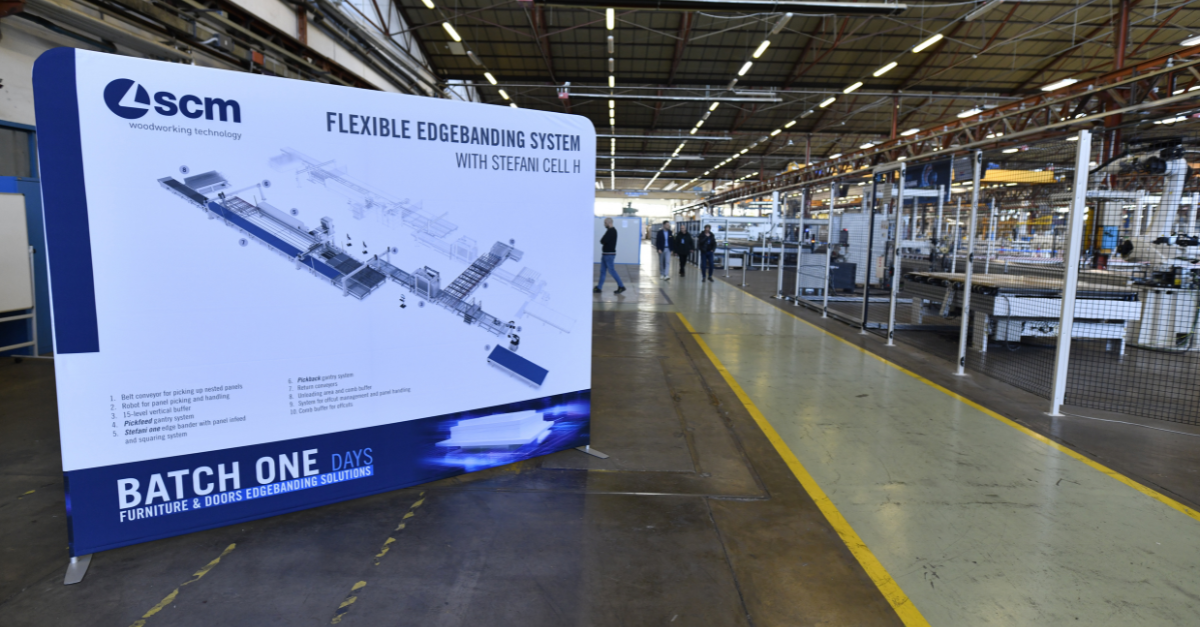
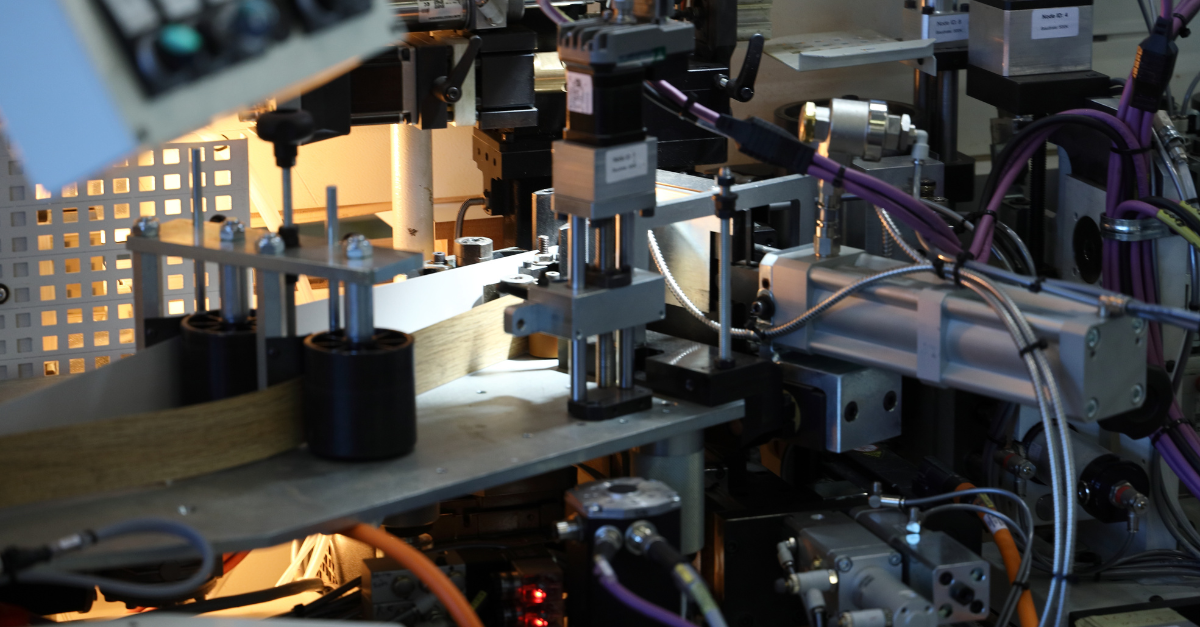
A path that combines production flexibility, digitalisation and an increasingly industrialised factory vision. This is the common thread of the “Batch One Days”, the event organised last November by SCM at its headquarters in Thiene, the group’s strategic hub for edgebanding and sizing-edgebanding. Two days – which gave us the opportunity to closely observe the latest solutions developed by the Rimini-based giant for “batch one” processing of panels and doors – during which the focus was on systems designed for very different production contexts, yet united by a steadily growing demand: the ability to quickly switch from one process to another without sacrificing quality, operational continuity and customisation.
A clear concept that represents the very essence of “batch one” and translates into finding effective solutions to manufacture increasingly different pieces with the same efficiency as large volumes. “Edgebanding once again becomes a central node within broader systems, where machines with their software, the MES and logistics systems turn the factory into a dynamic, flexible and increasingly efficient ecosystem. The approach is that of a scalable model, applicable both to small businesses and to structured international design companies”.
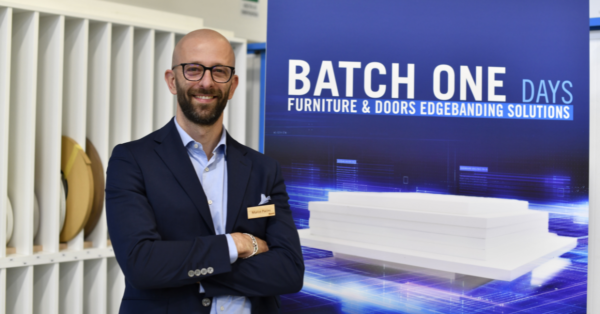
A clear direction – the one undertaken by SCM – best explained by Marco Pacini, Business Unit Manager Edgebanding, who after a technical and commercial career around the world, took on commercial leadership and responsibility for product development of SCM’s Thiene Business Unit.
“In recent years market demands and customer needs have changed. Today the word ‘flexibility’ probably better describes the evolution of our customers’ requirements than the term “Batch One”. It doesn’t matter whether the batch is 1, 5, 10, 20 or more… what matters is the system’s ability to adapt quickly and efficiently to continuous production changes. In recent years the trend has been clear, with batch sizes progressively decreasing. Where in the past production runs were 500 pieces, today they drop to 200, 100, 50 or even less. In this scenario we have completed numerous installations of flexible cells in various markets – from Europe to the Americas and Asia – and the drivers are always the same: reduced inventory and delivery times, greater production flexibility and an increasingly strong quality/cost ratio of the finished product. The market demands real flexibility. The issue becomes even more complex when moving from panels to doors. In the first case flexibility allows you to instantly change the edge type and manage size changes in a very short time. The panel surface, however, always remains flat. With doors an additional level of complexity is introduced; the surfaces feature different profiles or rebates. For this reason, “Batch One” applied to doors represents one of the most advanced technological challenges in the sector, requiring significant expertise and highly specialised solutions”.
After last year’s events, this year you have once again chosen to “open the doors” of Thiene…
“Exactly. And this year, for the first time, we decided to present within the same event “Batch One” solutions for both panels and doors, with new machines and systems developed for major European customers, whose delivery is scheduled shortly. The goal is to concretely demonstrate what flexible production means when applied to different contexts. It is a direction we want to make structural: periodically organising events dedicated to “Batch One” to present new and truly significant solutions. We never stop, we are always looking for new solutions, new ideas, increasingly effective ways of working so that every need can be met. We are not talking about innovation in a broad sense or – allow me the provocation – just for “marketing” purposes (smiles, ed.), but in concrete terms. For example, in the door segment, innovation has focused mainly on automating processes that in the past required manual intervention. We have introduced new operating units that allow, for instance, automatic door profile changes, while increasing both quality and reliability. Another important step – Pacini continues – concerned a further improvement in finishing quality, particularly on corners, where edge joining has always been one of the most critical aspects: thanks to new patented finishing units, we have achieved exceptional quality levels, literally making a quantum leap compared to past solutions, positioning ourselves above market standards“.
Integration, MES, “Control Room” and service: what does “integration” mean today?
“In the past integration meant physically connecting one machine to another, cutting to edgebanding, edgebanding to drilling. Today the concept has radically changed and we can also have stand-alone machines, not mechanically connected, but perfectly integrated from a software standpoint. This is where MES and data management come into play. We chose to develop our own “WinMes” software because we know the machines and industrial flows: this allows us to deliver the right data, at the right time and to the right people, helping customers optimise plant utilisation and increase operational efficiency. The system is open and flexible and can integrate SCM machines as well as machines from other manufacturers; it is “retrofit-friendly” and allows even older systems to be connected. When equipment is not “natively ready” for connection, such as a forklift, we use simple tools like a tablet to collect data and make it part of the system. This approach is closely linked to service and predictive maintenance. That is why we developed the “Control Room”. Not just software, but also a physical structure, with a dedicated team of experts analysing the operation of more than 4,000 connected machines worldwide, which constantly send data. Sensors, increasingly high-performance technology, artificial intelligence and the expertise acquired over the years allow us to support our customers in a proactive and predictive way. Today it is no longer enough to solve a problem quickly when it occurs; it is essential to prevent it and guide the customer towards the correct use of technology. The real challenge, especially in highly automated and “Batch One” contexts, is to leave complexity to the machine manufacturer and deliver a simple and reliable solution to the customer“.
What are the challenges of edgebanding today?
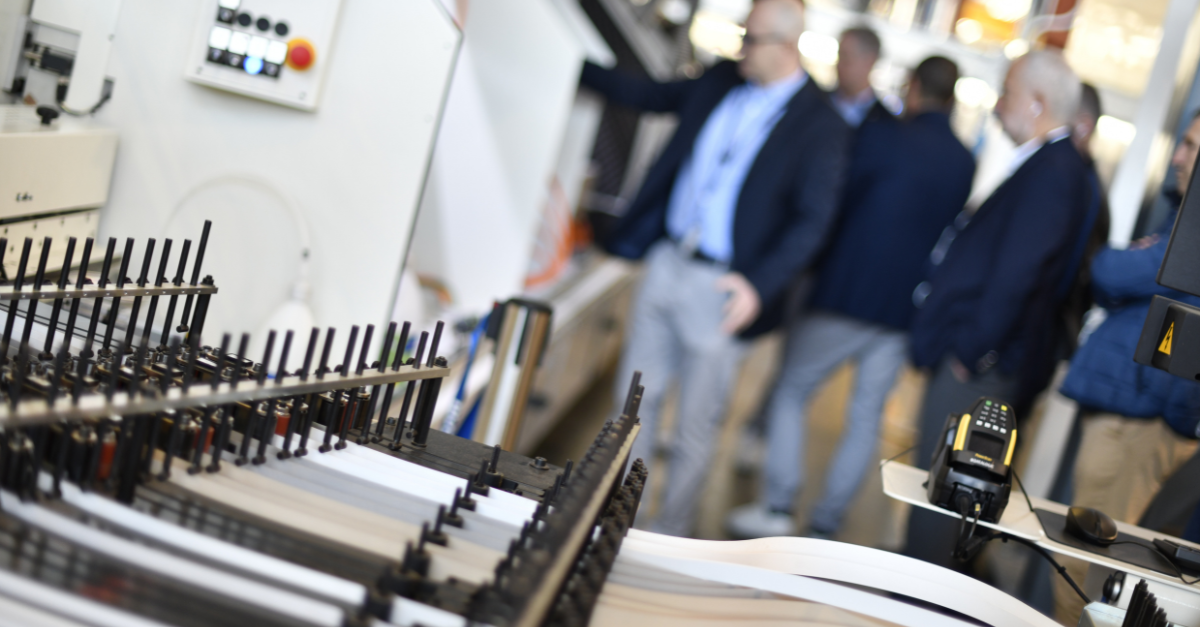
“The edgebanding process, in theory, is simple: a panel, glue and the edge. Complexity emerges when considering the level of quality demanded by today’s market. Over the years technologies have been developed to make the glue line ‘invisible’, but today, especially in Italy, the use of polyurethane adhesives is growing strongly. The challenge is to achieve edgebanding with glue without the line being perceptible: the customer must look at the panel and not distinguish the joint. For us this is not an option, it is an essential requirement, which must be scalable across all technology ranges, from high-end machines to “entry level” solutions. Our mission is to be recognised worldwide for the best price-solution ratio in the field of flexible production. I would like to stress that we speak of a ‘ratio’ and not a ‘compromise’, because we see our customers as partners with whom we build long-term relationships of trust and collaboration, without compromising on quality. We interpret the concept of “solution” in a broader sense, considering a combination that includes productivity, ease of use, reliability, safety, sustainability, energy consumption, noise, hardware and software integration, and after-sales service. In this journey the operator plays a crucial role. We always start by listening to the market: customers clearly tell us it is increasingly difficult to find personnel, and even more so trained operators with manual skills. Machines must therefore do with fewer people what previously required more operators, or allow them to do even better: more safely, with less effort and more simply, also looking towards increasingly intuitive and, in the future, remote use. Our solutions must enable higher output in a single shift, allow work with fewer operators or free people from repetitive tasks, making their work more qualified. Ultimately, our task is to manage complexity internally and deliver a user-friendly solution to the customer. We design highly complex “Batch One” cells and flexible systems, but for the operator everything should boil down to a few essential actions: start, stop, barcode reading. Technology can be very advanced, but ease of use must remain a fundamental requirement. This is the direction we have taken and want to continue to demonstrate”.
If you were to assess this first year as business unit manager?
“I would say it has been extremely positive”, commented Marco Pacini. “We are a strong and cohesive team, with enthusiasm and a great desire to achieve. Product development is very close to the market and brings concrete ideas, while the commercial side is achieving significant results despite a complex scenario, including tariffs and geopolitical tensions. In a context where many operators are slowing down, we are confirming last year’s figures and recording strategic sales in both the panel and door sectors”.
What about prospects for the near future?
“On a “macro-economic” level I expect 2026 to be slightly better than 2025, first and foremost hoping for a reduction in geopolitical tensions that are currently affecting many sectors. In strictly numerical terms, I imagine 2026 in line with 2025, assuming the same context. Our goal, however, is not simply to maintain volumes but to be able to grow. And we are working precisely in this direction, investing in people and projects. Young talents are joining, there is enthusiasm and we have many activities under development, particularly in flexible edgebanding and “Batch One”. In a year’s time, if everything goes as planned, we will be able to present new and concrete solutions designed to best support customers and further strengthen our market presence. If I had to summarise the future direction in three words, I would say quality, reliability and simplicity. “Made in Italy” is first and foremost quality, but to compete at the highest levels it is essential to work rigorously on reliability as well. Simplicity is the element that makes both sustainable: the simpler a product is, the easier it is to sell, use and maintain over time”.
Edited by Francesco Inverso
Read also...
IMA Schelling acquires a stake in Sirio
Egger: 30 per cent stake in Chinese manufacturer Sinowolf
Bastian Siglreithmaier to head four Deutsche Messe trade fairs
Wood drying: technology, energy and skills at the centre of the debate
Altendorf concentrates production in Minden