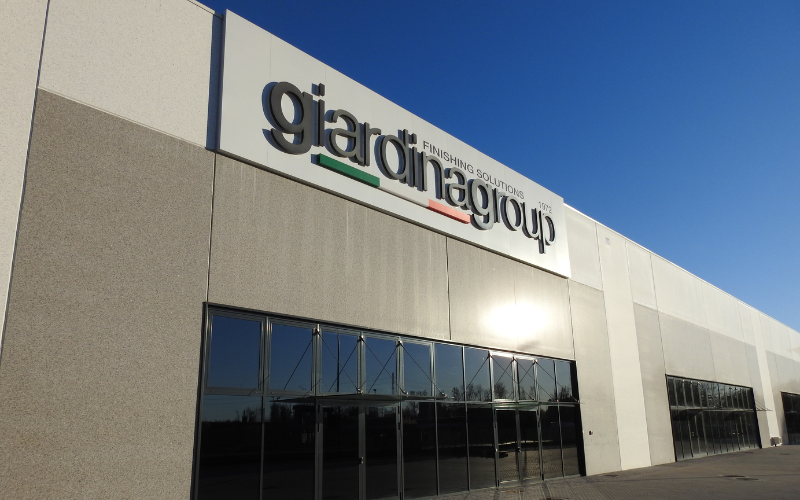
Giardina Group: beyond coating
Foresight and the ability to anticipate market demands. Speaking with Stefano Mauri, co-owner of Giardina Group together with his brother Riccardo Mauri, means entering a dimension that goes far beyond technology.
The conversation does not stop at the machine or the evolution of coating processes in the strict sense, but inevitably broadens to include the vision, the future of a sector that has changed profoundly in recent years and will continue to transform with ever greater speed.
Today, coating is no longer – allowing ourselves a simplification – “spraying paint” onto a panel or onto an element made of wood and other materials. It is an articulated and complex process that requires cross-disciplinary skills: from product chemistry to application systems, from preparation and sanding stages to drying management. A set of interconnected steps that can no longer be read individually, but only within a process logic.
A logic that also requires an in-depth knowledge of the final product: whether it is a window frame, a furnishing element or any other manufactured item, every application brings with it specific requirements in terms of materials, performance, aesthetics and durability. It is precisely this ability to understand the final context that today makes the difference in designing a truly effective coating cycle.
And in this scenario, the way of doing business has also changed. The market requires companies to grow, evolve and rethink their approach: no longer suppliers of individual technologies, but partners capable of overseeing the entire production cycle, offering integrated and coherent solutions.
It is precisely in this direction that Giardina Group’s strategic choices are moving, including the recent integration of CML Finishing, a company well known in the window frame coating sector, which helps further expand the group’s technological and application perimeter.
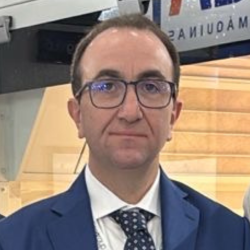
The entry of CML Finishing marks an important step for Giardina Group. Where does this decision come from?
“To understand it, we need to take a step back. Giardina Group has always had a strong industrial vocation, built over time through a path of progressive integration of skills rooted in the history of Mauri Macchine, the company founded in 1972 by my father, Giampiero Mauri.
Over time, these skills have been transferred, expanded and reinterpreted within Giardina Group, giving rise to an identity increasingly oriented toward advanced finishing systems. A path that found a key milestone in the strengthening of the group with Destefani, further consolidating know-how in sanding.
In this context – Stefano Mauri continues – continuing to expand knowledge and process possibilities was an almost natural step, I would say inevitable. Over the years, further collaborations were developed, including the one with Marval, a company specialized in creating solutions for the production of insulating glass units.
Both Marval and CML Finishing represent the result of a long industrial “youth” shared with partners with whom we have built solid and continuous relationships over time. The decision to strengthen these ties stems from a very clear awareness: today the market requires an increasingly complete, articulated and integrated offer.
It is no longer a matter of proposing individual technologies, but of being able to respond in an organic way to increasingly complex production needs.
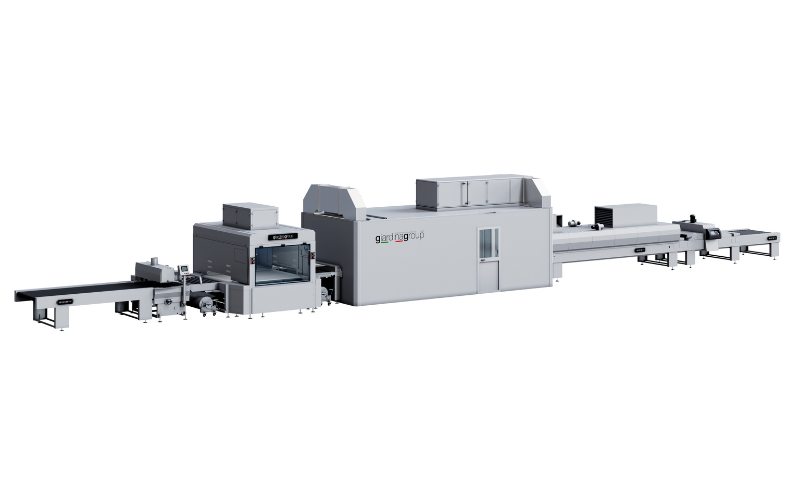
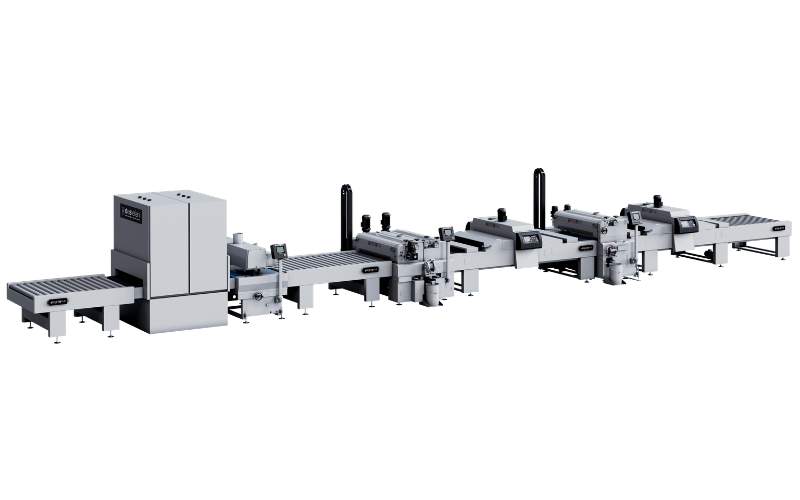
It is within this logic that the evolution of our positioning takes shape: the skills developed over the years – from profile coating to the most advanced systems – have led us to design specific solutions also for the window frame sector, such as our “Profisprayer 1VE”, “2VE”, “1VR” and “2VR”.
“Today, however, the issue is no longer just “coating better”, but understanding the final product more and more deeply. In this sense, insulating glass represents a key step: it has become a structural element of the window frame, determining its performance and quality. Moving closer to this field means getting even deeper into the heart of the product and the process.
At the same time, we have seized the opportunity to strengthen our presence in the coating of the “hung window frame”, an area we had already explored in the past.
It is in this context that the involvement of CML Finishing fits in, enabling us to complete our offer.
Today we present ourselves to the market with an extremely broad offer: Giardina Group is able to engage with window manufacturers by proposing solutions that concern not only finishing, but also extend to automation and industrial logistics, elements that are increasingly central in modern coating processes”.
In the sector, people are increasingly talking about “selling the process” rather than the individual machine. Is that really the case?
“We must be careful with simplifications, because reality is more complex. Today there are two trends coexisting, clearly distinct and above all linked to the level of maturity of different markets.
In the most technologically advanced contexts, the direction is clear: the winning solution is the high-automation line. Companies are looking for increasingly uniform and high-quality products; to achieve this result it is necessary to guarantee repeatable quality, and this is only possible through integrated systems and a high level of automation. It is a path that began decades ago but has now become dominant in mature markets.
At the same time, however, there are realities where labor is still available and relatively inexpensive. In these contexts, the standalone machine continues to play a central role. More and more often, moreover, end users purchase different stand-alone solutions and independently build their own production plant, based on acquired skills and information that is now easily accessible.
To respond to this dual need, we have structured our offer on two levels: on the one hand, we develop line projects entrusted to technicians and area managers with great experience, capable of analyzing the company as a whole. Layout, production volumes, product types and structural constraints: in many cases the issue is not only technological but also architectural, and it requires tailor-made solutions that allow our lines to be integrated even in complex contexts.
On the other hand, we have built an offer of stand-alone machines, with models available in the catalog and often ready in stock, allowing us to respond quickly to more immediate needs.
These two approaches are also reflected in our commercial organization, which is structured differently depending on the type of project. It is precisely this flexibility that allows us to adapt to different markets and offer solutions consistent with the real needs of customers”.
Having a solid “network” is therefore becoming increasingly important…
“Exactly. “International distribution” is playing an increasingly central role in our strategy. In many countries we are working to establish a presence through stable local contacts, who act as a link between Giardina Group and dealers. They are fundamental figures because they know the market, support partners and help make our presence in the territory more effective.
These partners operate by proposing product catalogs integrated with complementary solutions. In essence, we adapt to different markets, always with full respect for our industrial partners. This approach allows us to cover very different needs, ranging from individual machines – such as a Destefani sander – to complete lines. It is the only way to face a market that is increasingly fluid and variable.
But not only that: we are also investing heavily in training, because today it represents a key element. We have developed an “Academy” that will be officially presented in the coming months, an initiative for which we have created a technical manual on coating that gathers all the know-how accumulated over the years.
It is a concrete tool, already translated into several languages, designed to support client companies in training new resources, but also in updating technicians and line operators. Processes are becoming increasingly complex and sophisticated, and making structured knowledge available is now an integral part of the value we can offer the market.
Today the relationship with the market and the customer has changed; it must be built on competence. The customer expects an interlocutor capable of entering the company, concretely analyzing the problem, understanding production needs and returning with a technologically sound proposal. It is no longer just a matter of selling a solution, but of contributing concretely to the improvement of the production process. It is on this ground that the quality of the relationship and, consequently, the choice of partner are decided today”.
“You see – Stefano Mauri explains – today technology is mature and, if we are talking about top-tier manufacturers, machines are often comparable. The real difference no longer lies so much in the machine itself, but in everything that comes before and after it.
Before the sale, strong consulting capability is essential: it is not enough to know the machine, one must understand – as we have said – materials, coating cycles, chemical products and the entire production process in depth.
When intervening, for example, on a window frame or a kitchen door, one enters a supply chain that begins long before the finishing stage, and only a complete vision makes it possible to propose truly effective solutions.
After the sale, instead, the ability to support the customer over time comes into play. Machines work, wear out, consume and must be continuously optimized. The customer needs a partner who supports them in the evolution of the production cycle, keeps them updated on new materials and technologies, and helps them constantly improve performance.
It is on this dual level – before and after – that the real competitive advantage is built today and, above all, a solid and lasting relationship with the customer”.
Looking to the future, what role could technologies such as AI play in your sector?
“Artificial intelligence is certainly one of the most discussed topics today, but it must be approached with great care and without simplifications. It is a potentially very powerful tool, but also a delicate one, requiring a conscious approach.
In our sector it can have interesting applications, especially in areas linked to services and customer relations. More complex is the issue of plant design: many of our systems are custom-made, built around specific production contexts and unique structural constraints, where human experience and expertise remain fundamental.
Precisely for this reason, we are not limiting ourselves to “evaluating” it, but are studying it carefully, trying to identify the areas where it can bring real added value. It is still an evolving path, but it is likely that already within the year we may have something concrete to share.
For now – allow me the term – we prefer to “avoid spoilers…”.
Read also...
Xylexpo 2026 confirms ISF certification
Biesse: North America at the centre of investment
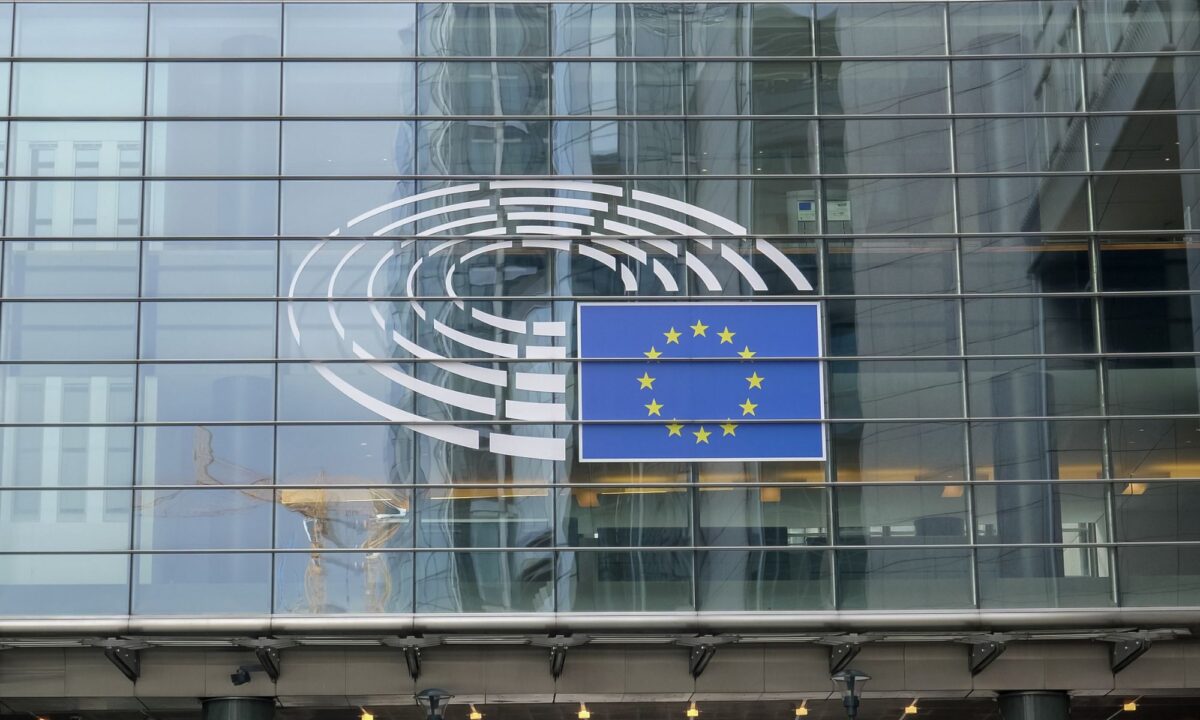
Cbam, FederlegnoArredo: “…the European Parliament’s vote confirms the concerns”

FederlegnoArredo: new presidents elected for the furniture associations

The state of “Made in Italy”