Wood drying: technology, energy and skills at the centre of the debate
At Xylexpo, manufacturers and researchers discussed how wood drying is evolving through automation, connectivity, energy efficiency and new treatment technologies, while highlighting the growing need for specialised skills and closer cooperation between industry and universities.
Wood drying may appear to be one of the most established processes in woodworking: a machine, heat and a material that needs to reach the right moisture content. In reality, as emerged during the talk organised at Xylexpo, it remains one of the most delicate stages in the entire woodworking process, requiring experience, scientific knowledge and the ability to adapt parameters and technologies to the characteristics of the material.
The discussion therefore went well beyond machinery, focusing on how technical know-how can be preserved and transferred to a new generation of operators at a time when the shortage of specialised skills is becoming increasingly evident across the industry.
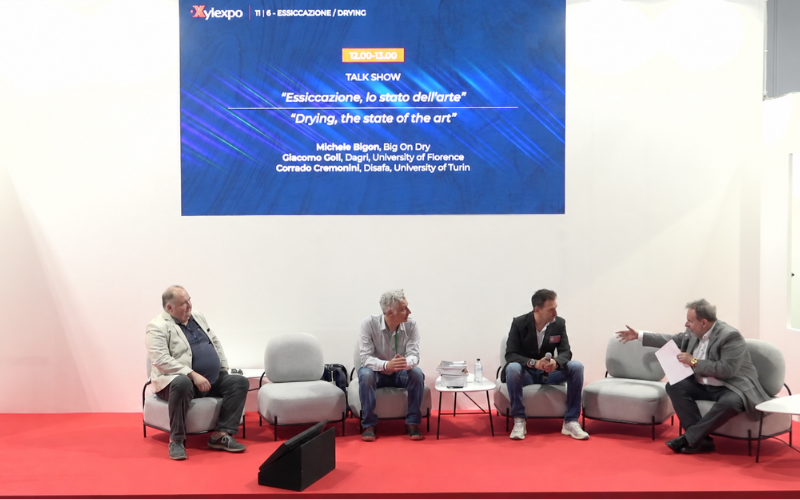
One of the main topics was the growing gap between increasingly advanced equipment and the skills available to operate it. Michele Bigon of BigOnDry explained that manufacturers can no longer limit their role to supplying technology: they increasingly need to support customers in understanding the process, setting drying cycles correctly and making full use of the capabilities of the equipment.
At the same time, automation and digitalisation have profoundly changed the way kilns are operated. As recalled by Bruno Bigon, founder of BigOnDry, many operations that were once carried out manually are now managed automatically. Remote connectivity has also changed the relationship between manufacturer and machine, allowing specialists to assist customers not only in solving technical problems, but also in adjusting cycles and improving the final result.
Energy efficiency was another central issue. Drying is an energy-intensive process, and the focus is increasingly shifting towards monitoring actual consumption, improving machine efficiency and selecting the most suitable energy source for each application. Gas, biomass, heat pumps and electricity can all play a role, while hybrid systems offer greater flexibility.
Research is also looking at energy recovery, storage and renewable sources. As Giacomo Goli, professor of wood technology at the University of Florence, pointed out, the environmental and economic impact of a drying kiln depends above all on the energy consumed throughout its operating life.
The discussion also moved beyond conventional drying. Thermal modification, advanced steaming and high-temperature treatments can improve wood stability, modify its appearance and extend the possible uses of species with lower commercial value. Sensors and predictive models are also making it possible to adjust temperature and humidity according to the behaviour of the material during the process, reducing defects and improving consistency.
In this sense, drying is becoming more than simply removing moisture from wood. It is increasingly a process capable of modifying the technical and aesthetic characteristics of the material.
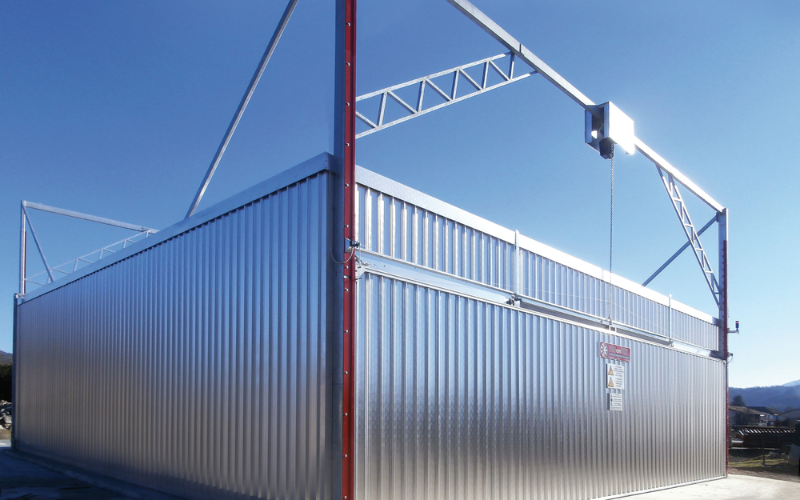
The final part of the debate focused on research and skills. Michele Bigon highlighted the need for a new generation of technicians able to support customers in managing increasingly sophisticated systems, while Goli stressed the importance of connecting university training with real industrial problems.
Corrado Cremonini of the University of Turin also underlined the need for a stronger and more balanced relationship between research and industry, combining scientific expertise with practical production requirements.
Attracting young people to wood technology, however, remains a challenge. Specific university courses still struggle to attract sufficient numbers of students, despite the strong demand for these skills from companies.
These are only some of the topics discussed during the Xylexpo talk. The full debate, with all the contributions and technical insights, is available on Xylexpo Digital: watch the full video here.
xylexpo.com
Read also...
Altendorf concentrates production in Minden

Dürr, new metering pump for industrial coating applications

Energy renovation: a challenge involving the wood industry as well
Raute, EUR 31 million order to expand plywood production in Estonia

Lamello at Sicam with “Cabineo”