The Italian group has recently presented “Smart Spindle”, the new intelligent electrospindle that combines efficiency, proactive services and sustainability. We talked about it with Luca Bergantini and Antonio Latella, respectively business unit manager for machining centres and drilling solutions and product owner smart devices and sensors at Scm Group.
In a modern industry that is moving rapidly toward the ecological transition, sustainability and innovation are no longer separate buzzwords, but two sides of the same coin. One feeds the other, in a balance that aims to combine production efficiency and environmental responsibility. At SCM this vision has for years been an integral part of the company strategy. It is a commitment that today is strengthened by the digitalisation of processes and data management as key tools to make production increasingly sustainable, predictive and intelligent.
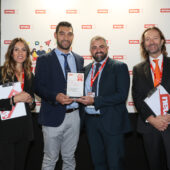
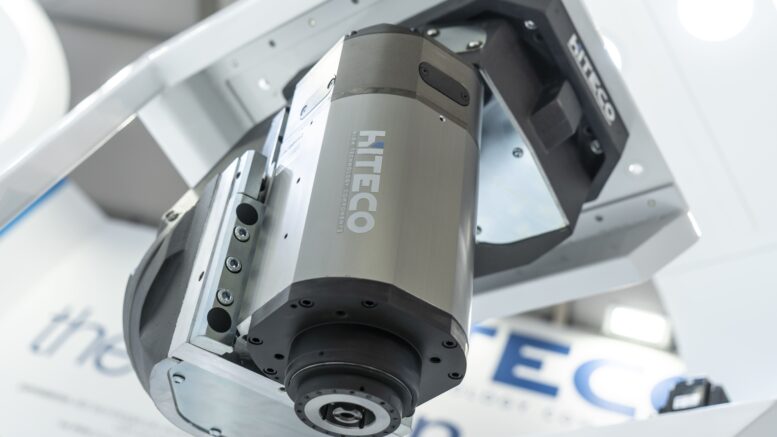
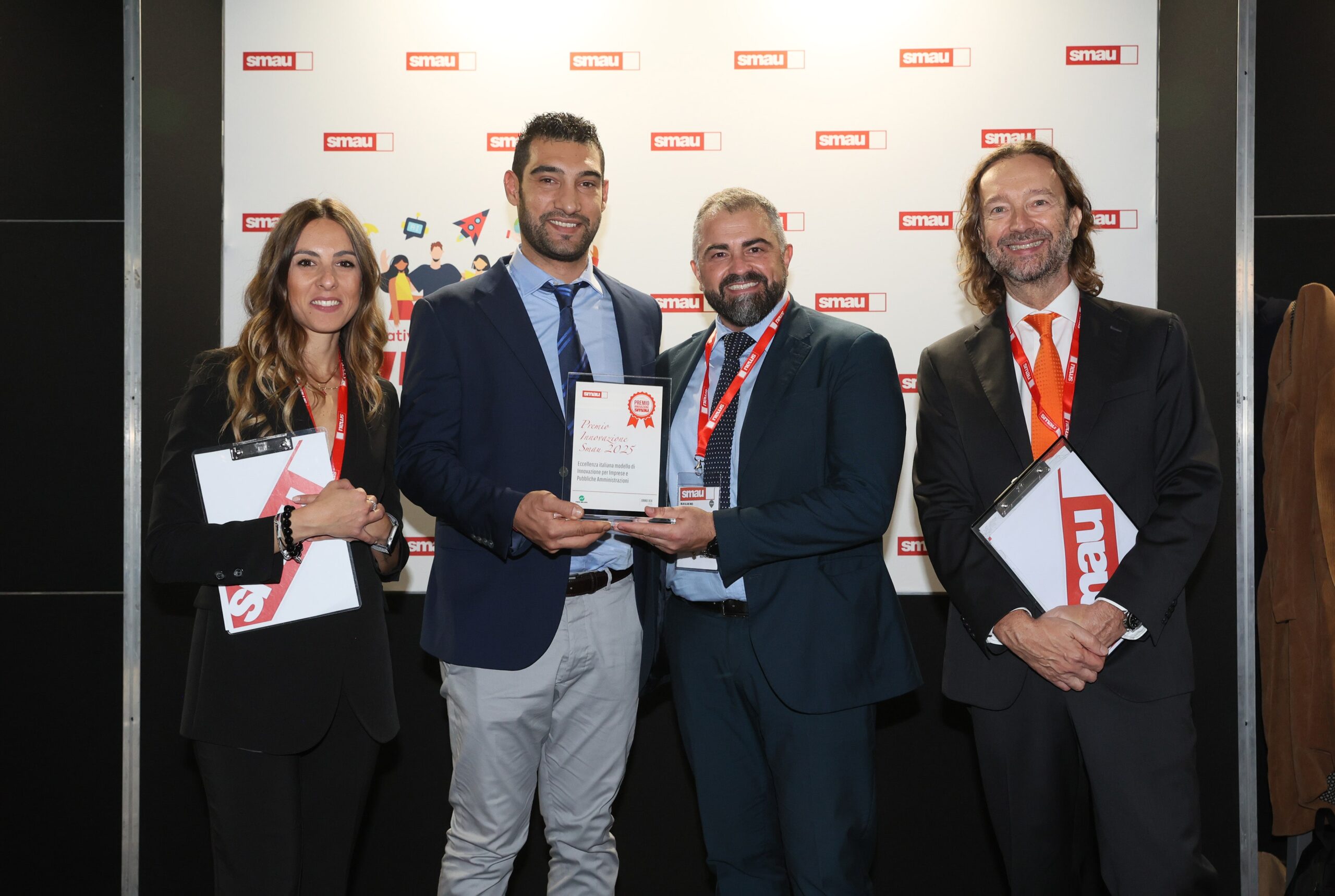
It is from this convergence of values that the “Smart Spindle” project (intelligent electrospindle) was born, developed by the Scm Group “Digital Control Room” and also awarded at the latest edition of SMAU in Milan. The new electrospindle is the result of collaboration with Hiteco, a group company specialising in high-tech components for machine tools, and integrates IoT sensors, software and artificial intelligence technologies to monitor and optimise machine performance, reducing consumption, waste and environmental impact.
The goal is ambitious: to transform this crucial component into an enabler of sustainability and productive intelligence, capable of optimising the entire life cycle of the machine and not only its energy consumption. “Often, when we talk about sustainability, we think only of reducing the energy consumption of machines. With the Smart Spindle project, we adopt a broader vision of an industry that is increasingly connected, sustainable, data-driven and customer-oriented, where collaboration between companies, technologies and customers generates shared and lasting value. The goal is to use the machine in a more responsible way, manage resources intelligently and ultimately extend its useful life”, as Luca Bergantini, business unit manager for machining centres and drilling solutions at SCM, points out.
FROM CONNECTED COMPONENT TO INTELLIGENT ECOSYSTEM
As the beating heart of every machining centre, the electrospindle is the motor that generates the rotary movement required for operations such as milling or drilling. Traditionally considered a “passive” element, today this key component is going through a real revolution, transforming, as we mentioned, into an intelligent node within a broader ecosystem of services.
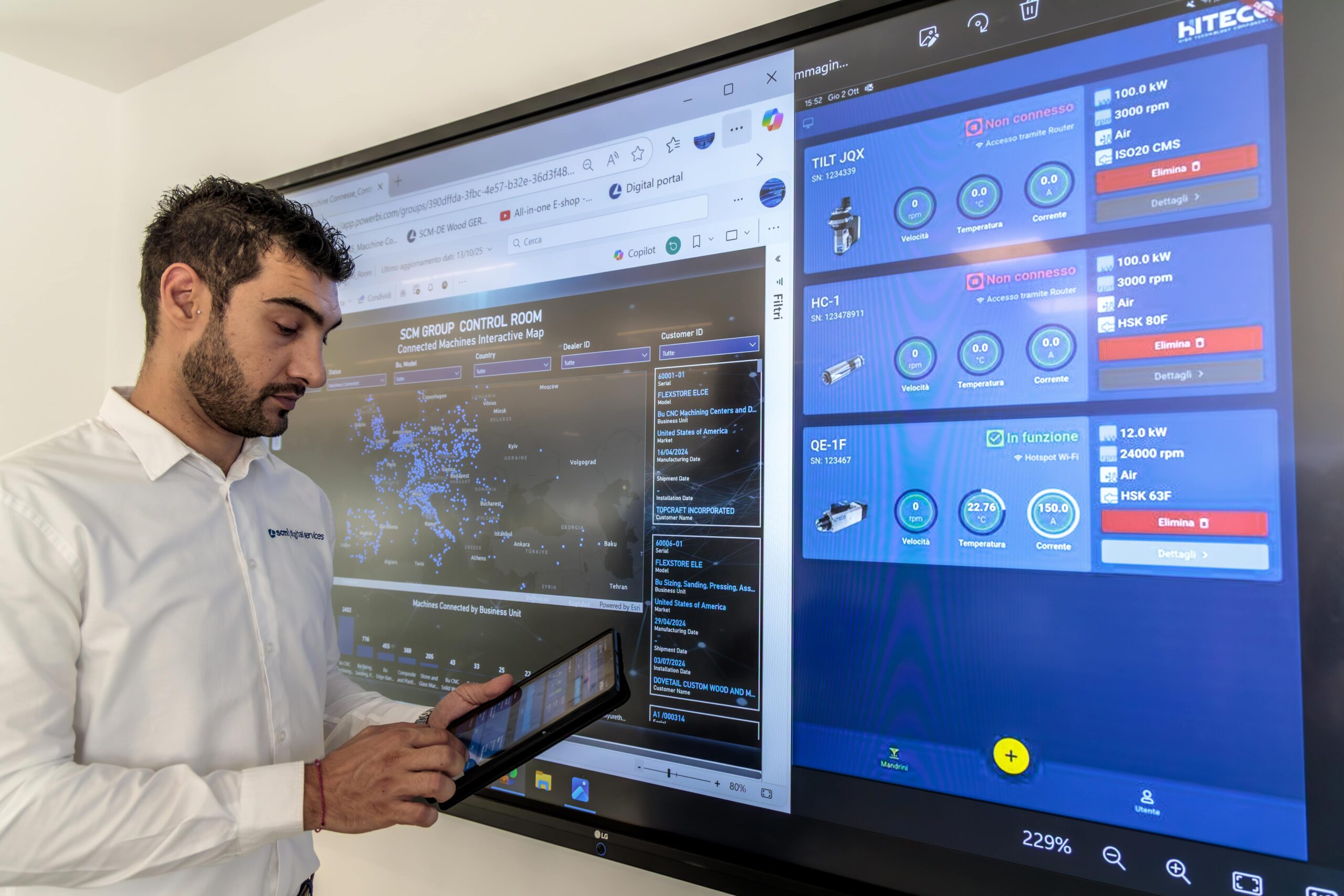
With the “Smart Spindle” project, Scm Group has turned the spindle into a system capable of monitoring its own health status, adapting to working conditions and preventing failures. The key to the system is the “Smart Spindle Board”, an intelligent control unit that collects and analyses data from internal sensors – temperature, vibrations, tool change cycles and other physical parameters – and sends them to the machine PLC and the network. This information is processed in real time and shared with the Scm Group “Digital Control Room“, where artificial intelligence models analyse trends and abnormal behaviours. The system can anticipate faults, open automatic service tickets and start predictive interventions even before the customer perceives the problem. All this takes place in full compliance with data governance and transparency principles: data remain the property of the customer, are anonymised and used exclusively to optimise performance and services.
FROM MACHINE TO SERVICE: A NEW BUSINESS MODEL
“Smart Spindle” represents not only a technological evolution, but also a strategic paradigm shift in Scm Group’s digital transformation and servitisation journey. From machine manufacturer to promoter of an ecosystem of intelligent services, the company is evolving toward a model that enhances data sharing, collaboration among industrial partners and the creation of continuous value throughout the entire product life cycle.
This approach radically changes the perspective: from reactive use of the spindle to proactive management that improves performance and extends the useful life of the machines. “We move from passive use to proactive use,” adds Bergantini, “because while in the past the spindle was used until it failed and then replaced, it now becomes a source of information to improve maintenance and energy efficiency.”
The result is a reduction of up to 30 percent in machine downtime, with an even more sustainable management of the entire production cycle that covers not only energy efficiency, but also logistics and spare parts. “Since we now have real-time information on the spindle condition,” Bergantini notes, “we can predict possible downtime, reducing unexpected failures and logistical impacts. On an installed base of thousands of machines, as you can easily imagine, this systemic approach brings tangible benefits along the entire supply chain.”
We mentioned thousands of machines installed. So can “Smart Spindle” also be integrated on those already in operation?
“It is perfectly installable,” explains Antonio Latella, product owner smart devices and sensors at Scm Group, “also on the existing machine fleet, what we call ‘brownfield’. When a spindle is sent to Hiteco for an overhaul, we offer the customer a broader service package that also includes making the spindle smart. Naturally, the information is more complete on new-generation native models, but we have developed dedicated sensor systems that make it possible to connect even spindles installed on existing machines. It is a concrete way of bringing intelligence and connectivity to the installed base as well, extending its life and improving its performance. This also provides significant benefits in terms of predictive maintenance. You see, in traditional spindles we only have a few analogue data, whereas with Smart Spindle we can rely on a network of sensors that detect parameters such as current draw, vibrations, temperature or tool change cycles. This volume of data is processed in two ways: in real time by the control unit integrated in the spindle and, in aggregated form, in our Digital Control Room.
Thanks to artificial intelligence algorithms, we are able to anticipate potential anomalies or maintenance needs. For example, if tool change time exceeds a certain threshold, the system knows that greasing is required.
This approach drastically reduces downtime and unnecessary interventions and also has a direct economic impact: customers no longer need to purchase spare spindles out of fear of sudden failures, with a clear benefit in terms of costs and sustainability.”
So sustainability also means energy saving?
“Exactly. This intelligent spindle,” Latella confirms, “does not just ‘talk’ to the machine, it adapts its behaviour according to operating conditions.
A simple example is the cooling fan, which in traditional models always runs at 100 percent power, even when the machine is idle. In our system, the temperature sensors communicate with the fan. If the spindle is cold, the fan drops to 10 percent of its speed, reducing consumption from 150 to about 15 watts. It may not seem much, but multiplied by more than 4,000 machines connected to the Digital Control Room, it means tens of kilowatts saved every day, as well as quieter and more comfortable operation for the operator.
Another example concerns monitoring tool wear. When a cutter draws more current than usual, the system recognises that it has reached the end of its life and alerts the operator. In this way, waste of energy, materials and maintenance costs is reduced, improving the overall efficiency of the machining process. It is a concrete example of how digitalisation and sustainability can move in the same direction.”
Is Smart Spindle set to become a – allow us the term – “standard” component on SCM machines?
“That is what we are aiming for,” confirms Bergantini. “The integrated onboard sensor system is not only a technical element, but a true enabler of services and functions that we are only beginning to explore. We started with a focus on sustainability, but this technology opens up much broader scenarios, from predictive maintenance to advanced business models, and even to the customisation of processes based on real usage data. Our goal is to make Smart Spindle a standard feature, accessible to everyone, because it represents a concrete step toward more efficient, intelligent and connected machines.”
This year you celebrate your twenty-five years at SCM. How has the approach to work and technology changed in this time, in which technology has advanced so quickly in such a short period?
“I have to admit that twenty-five years is a long time and it allows me to look back with some perspective. When I started, everything was analogue: the instruments we used, the machines we offered, even the sensors were basic, and fifteen years ago a temperature sensor was simply a strip that changed colour with heat. Today, by contrast, we talk about intelligent systems that collect and interpret data in real time.
The real evolution, however, is not just technological, it is mental. You have to be willing to question the status quo, not assume that what worked yesterday will be enough tomorrow. This has always been my mantra, first as a sales person and today as a product person. People make the difference. Having a young, curious, digitally native team, like Antonio and many other colleagues, is the key to continuing to innovate with vision and concreteness, always based on a keyword that will never go out of fashion: competence.
And this is why we work on training the new generations, building relationships with schools and with projects and training bodies. I believe it is a responsibility of companies to transfer their know-how to younger generations. We collaborate with universities and training centres, such as the Polo di Lentate Artwood Academy (we talked about it on page 26, ed.), a true Italian excellence.
There, young people can see first-hand what it means to work with a machine that is connected and integrated in the Digital Control Room. We have not yet done a specific focus on Smart Spindle, but we will soon. It is a project that perfectly represents the evolution toward craftsmanship 4.0 and 5.0, where manual skills meet technology and then integrate with sustainability.
In this context, I would like to broaden the concept of sustainability. It no longer concerns only energy or machines, but also the people who make this evolution possible.
Today, digital technologies make it possible to open up the manufacturing sector to new skills and, for example, to a greater female presence, something unthinkable years ago.
For Scm Group, sustainability also means building a balanced, inclusive working environment capable of regenerating itself, where human resources grow together with technology. In this sense, the issue of gender equality is central. We are working hard, both internally and with the world of education, to promote STEM pathways that bring more women into this sector. Real innovation, in the end, is the one that helps not only machines evolve, but above all people.”